


Gitar Band Hero
3.621.00 Reviews
App Specs
- Version
- 13.0.0
- Updated On
- License
- Free
- Downloads
- 1,000,000+
- Developer
- Bz Dev
- Categories
- Music
- Platform
- Android
Screenshots
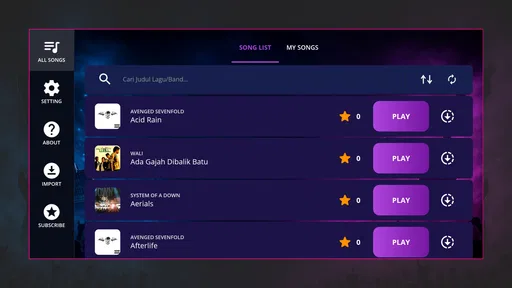
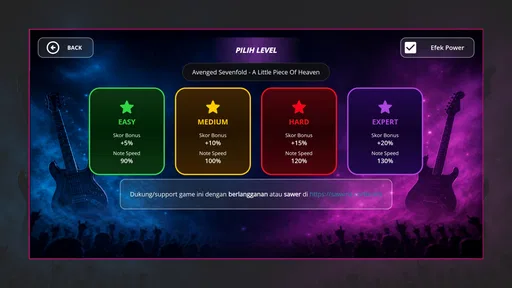
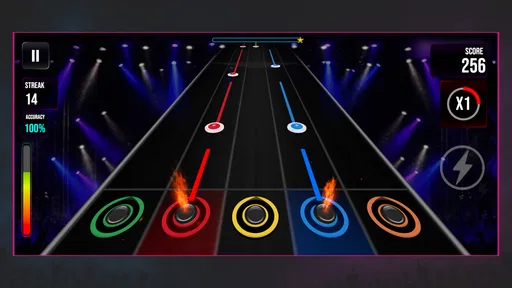
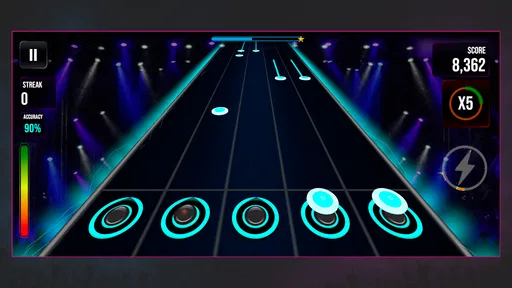
 Analysis by AppCompare
I approached Gitar Band Hero as a quick music game rather than a serious guitar-learning tool, and that distinction matters from the first few minutes. It is a free Android game from Bz Dev, built around the familiar fantasy of playing along like a band hero without needing a physical instrument. The idea is immediately accessible: pick it up when you have a short break, follow the musical action, and see whether your timing can keep up.
That simplicity is also the reason I can imagine recommending it to some people while steering others elsewhere. If you want an uncomplicated guitar-themed game that is easy to try, it has a clear appeal. If you expect a deep rhythm system, structured lessons, realistic guitar technique, or the polish of a major console music franchise, the experience feels much more limited. My overall impression is that it works best as casual entertainment, especially for someone who wants a music-flavored game without committing to a long learning curve.
How the current version feels in everyday use
The current release is version 13.0.0, and the game has been available since March 15, 2020. That history gives it a useful advantage: it is not a brand-new experiment that still needs to prove its basic concept. At the same time, its age is noticeable in the way the experience feels. I found myself judging it as a straightforward mobile game designed for short sessions, not as a constantly expanding platform with the depth of newer rhythm titles.
Starting a session is simple, which is important for this type of game. I do not want to study complicated menus before playing a few songs or testing my timing. Gitar Band Hero is most comfortable when treated as something to open casually, play for a while, and close again. That makes it suitable for a commute, a waiting room, or a few minutes at home when I want interaction rather than passive music listening.
A realistic use case is a beginner who likes the image of playing guitar but is not ready to buy an instrument or follow a formal course. This game can provide a small taste of that fantasy. It gives the player a musical goal and a sense of participation, even though it should not be confused with practicing chord changes, reading tablature, or building finger strength. For that reason, I would present it to a curious friend as a casual guitar game, not as a substitute for a lesson.
The Everyone content rating also makes the game easy to consider for a broad audience. That does not automatically make every session equally enjoyable for every age group, but it does fit the uncomplicated, family-friendly positioning. The game is free to download, while optional in-app purchases are listed at $0.99 per item. I would therefore begin without spending anything and only consider a purchase after deciding whether the core play actually holds my attention.
The strongest part is the low barrier to entry
What I like most is the immediate premise. Music games can become intimidating when they introduce dense interfaces, complex scoring rules, or a large amount of content before the player understands what to do. Gitar Band Hero is easier to approach because its guitar-band theme communicates the mood quickly. Even someone who rarely plays mobile games can understand the basic attraction without reading a long explanation.
Worth Reading Before You Choose

EA SPORTS FC Mobile 26 Is a Bigger Football Game, but It Takes Time

Flipboard Shows What News Apps Must Do Beyond the Feed

Switching to Android Auto Means Rethinking Your Driving Routine

Google Calendar Makes a Crowded Week Easier to Manage

Ludo King Makes the Most of the Minutes Between Plans

Baby Panda World Brings Quick Play to Modern Phones, but Its Game Library Feels Busy
That makes it useful as a shared, informal game. A friend can try it for a few minutes without needing a tutorial session from me, and a younger player can explore the musical theme without having to know anything about guitar equipment. The trade-off is that accessibility can come at the expense of depth. Once the novelty of the theme wears off, the game needs satisfying timing and enough variation to keep a regular player interested.
I also appreciate that the game does not require me to approach it with a musician’s background. I do not need to know scales or chord names to understand the activity. This is a genuine strength for casual players, but it also explains why experienced musicians may find it too shallow. The game’s value comes from interaction and atmosphere, not from faithfully reproducing the work of a guitarist.
What the version history tells existing users
For someone installing it today, version 13.0.0 is the relevant starting point. The release date and current version show that the project has moved beyond its original launch build, but I would be careful not to read that as proof of a particular feature set or a major redesign. A version number alone cannot tell me whether the changes were mostly technical, visual, content-related, or focused on compatibility.
That is why my advice to existing users is practical rather than speculative: update to the current release before judging the game again, especially if you last tried it long ago. A newer build is the fairest way to assess the present experience. It also avoids forming an opinion based entirely on an older installation that may no longer represent how the game behaves on a modern device running a supported Android version.
The minimum operating-system requirement is Android 7.1. That is helpful for people using older compatible phones, although compatibility does not guarantee the same comfort on every device. Screen size, touch response, speaker quality, and general performance can all affect a rhythm-oriented game. I would test it with sound enabled and with the phone held in the position that feels most stable, because timing games become frustrating when the device setup is awkward.
There is also a useful distinction between popularity and personal fit. The game has passed one million installs, and its average rating is 3.6 from around ten thousand ratings. Those figures suggest that many people have tried it, but they do not remove the need to decide whether its particular style suits me. A broad audience can include both casual players who enjoy the concept and disappointed users who expected something closer to a full guitar simulator.
How it compares with the usual alternatives
Compared with a conventional music player, this game gives me something to do with the music-themed experience. That makes it more engaging when I am restless or want a small challenge. Compared with a dedicated rhythm game, however, it may feel less substantial if I am looking for elaborate progression, competitive scoring, or a large variety of play styles. The choice depends on whether I value the guitar theme more than long-term mechanical depth.
It also differs sharply from guitar-learning apps. A learning app normally earns its place by teaching chords, rhythm patterns, posture, or practice routines. Gitar Band Hero is better understood as a game that borrows the excitement of performing. I would use it before a lesson as a mood-setter, perhaps, but not as evidence that I am improving on a real guitar. Someone shopping specifically for instruction should choose a structured educational tool instead.
Against a physical guitar, the comparison is even clearer. The game is cheaper to try and far less demanding in terms of space, noise, and equipment. It is convenient for a quick session and does not require tuning. The physical instrument offers touch, technique, expression, and genuine musical control that a phone game cannot replace. I see the app as a low-commitment way to explore the fantasy of performing, not as an alternative to owning or borrowing an instrument.
There is a further trade-off with larger, highly polished rhythm franchises. Bigger games often provide stronger presentation, more elaborate progression, and a more established sense of event or competition. Gitar Band Hero can be preferable when I want something lighter and less demanding, but it is unlikely to satisfy a player who measures value by content scale. The best reason to choose it is its directness, not the expectation of a console-sized production.
Small habits that make the experience better
My first practical tip is to play in short, deliberate sessions instead of forcing a long run. The game’s casual identity works in its favor when I treat it as a quick musical break. If I continue after the interaction starts feeling repetitive, the limitations become more obvious. A short session leaves the experience feeling like a pleasant diversion rather than a task I am trying to complete.
Second, I would use headphones when possible, provided the connection does not introduce noticeable delay. In a timing-based game, sound is not just decoration; it helps me anticipate the rhythm and makes successful actions feel more connected to the music. If the audio arrives late, I would switch back to the phone speaker or another setup that feels more immediate. Comfort and timing are more important than using the fanciest audio equipment.
Third, I would avoid spending on the first visit. The free entry is one of the game’s biggest advantages, and the listed $0.99 price per item is small enough to seem harmless, but several small purchases can still change the value calculation. I would first check whether I enjoy repeating the available activity. If the basic loop does not hold my interest, an extra item will not fix the underlying problem.
A less obvious point is that the game can work as a social icebreaker even when nobody considers themselves a musician. Passing the phone around for quick attempts creates a simple comparison without requiring specialist knowledge. That use case is different from solo progression: the fun comes from seeing how friends react, not from building a serious personal score. For that purpose, the uncomplicated design is an asset.
Another useful approach is to treat it as a gateway to clearer expectations. A player who enjoys the performance fantasy may discover an interest in real guitar, while a player who only wants fast, colorful interaction may realize that a deeper rhythm game is a better fit. In both cases, the app can help identify what kind of musical entertainment the person actually wants.
Where the experience still falls short
The main limitation is depth. A guitar theme can create a strong first impression, but a theme alone cannot carry repeated sessions forever. Players who want a sense of mastery may eventually ask for more meaningful progression, greater variation, or a stronger reason to return. I would not install this expecting the kind of long-term structure associated with a dedicated competitive music game.
There is also a risk of confusing visual or thematic participation with musical skill. The game may make me feel like a performer for a few minutes, but it does not automatically teach timing in a transferable, instrument-based way. That is not a flaw if I approach it as entertainment; it becomes a problem only when I expect it to replace practice. Setting that boundary early prevents disappointment.
The rating of 3.6 reflects a mixed public response rather than universal enthusiasm. I read that as a reason to keep expectations measured. The game has enough reach to show that the concept attracts attention, yet the score also suggests that the experience will not satisfy everyone. In my view, this is exactly the kind of title worth trying for free, but not the kind I would recommend buying into heavily before testing it personally.
Players who dislike touch controls, need highly precise timing, or expect a large catalog of carefully structured content should probably skip it. The same applies to musicians searching for realistic technique. A different option is better for each of those needs: a more advanced rhythm game for precision and progression, or a dedicated guitar-learning app for actual instruction.
What I would watch before committing
If I were deciding whether to keep the game installed, I would watch three things during the first few sessions. First is replay value: do I want to return after the initial novelty? Second is control comfort: can I interact without feeling that the phone is getting in the way? Third is value: does the free experience already feel complete enough that optional purchases remain optional?
I would also pay attention to how the current version behaves on my particular phone rather than assuming that the experience will be identical everywhere. The Android 7.1 minimum makes the app accessible to a wide range of older devices, but older hardware can still differ in responsiveness and audio behavior. A brief test with the phone charged, the speaker clear, and notifications minimized gives a fairer impression than trying it in a noisy or distracting setting.
For existing users, the most sensible expectation is gradual familiarity rather than a dramatic transformation based only on the version number. Version 13.0.0 is the build to evaluate now, but I would judge it by the actual feel of play: whether the controls respond comfortably, whether the music theme remains enjoyable, and whether a short session gives me enough satisfaction to return. That keeps current evidence separate from hopes about future updates.
I would welcome future attention to the areas that matter most for retention: more reasons to replay, clearer differentiation between casual and skilled play, and a stronger sense of progress. Those are expectations, not promises, so I would not treat them as existing features. For now, the app should be chosen for what it already offers: a simple guitar-band fantasy in a free mobile format.
My recommendation for different kinds of players
I recommend it to someone who wants a free music game, likes guitar imagery, and prefers short sessions over a demanding progression system. It is especially easy to suggest to a curious beginner who wants to experiment without buying equipment. The Everyone rating and modest optional purchase price also make it a relatively low-risk trial for households that want a light game to sample together.
I would be more cautious with a player who has already spent time with sophisticated rhythm games. That person may notice the lack of depth quickly and compare every part of the experience with larger alternatives. I would also steer away anyone asking, “Will this teach me guitar?” The honest answer is that its role is entertainment. It can encourage musical curiosity, but it should not be the center of a practice plan.
After using it with those expectations, I see Gitar Band Hero as a modest but approachable music game from Bz Dev. Its free entry, broad age positioning, and simple guitar theme make it easy to try, while the mixed 3.6 average explains why I would avoid overselling it. The best way to enjoy it is to treat it as a quick performance-themed diversion, not a full instrument simulator or a complete rhythm-game platform. If that sounds like what you want, it is worth testing without spending first; if you need deep progression or genuine guitar instruction, another category will serve you better.
Pros
- Simple controls make it easy for beginners to start playing.
- Supports quick sessions when you only have a few minutes.
- Rhythm gameplay can improve timing and hand-eye coordination.
- Bright visuals and energetic tracks create an entertaining atmosphere.
- Works well as a casual alternative to more complex music games.
Cons
- Song variety may feel limited after extended play.
- Some levels can become repetitive once mastered.
- Ads may interrupt gameplay in the free version.
- Touch controls can feel imprecise during faster sections.
- Progression may offer limited depth for experienced rhythm players.
FAQs for Gitar Band Hero
What is Gitar Band Hero?
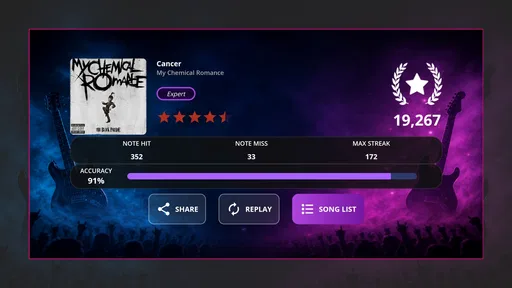
Gitar Band Hero is a music and rhythm game focused on playing virtual guitar tracks and completing songs through timed taps, presses, or other touch controls. After trying it, the main appeal is its quick, arcade-style gameplay: you follow notes, maintain your streak, and aim for higher scores. It is designed for casual sessions, although improving accuracy and unlocking stronger performances can make it surprisingly challenging.
How do you play Gitar Band Hero?
Gameplay is based on matching the notes shown on the screen with the rhythm of the selected song. You generally need to tap or interact at the right moment, avoid missed notes, and keep your combo active for a better score. The controls are easy to understand, so new players can start quickly, but faster songs require concentration and good timing. Headphones can make the rhythm easier to follow.
Is Gitar Band Hero free to download and play?
Gitar Band Hero may be available as a free download, but the exact model can depend on the version and platform. Free access may include advertisements, optional purchases, locked songs, or other progression limits. Before installing, check the official Google Play or App Store listing for the current price, in-app purchase details, supported devices, and any subscription information rather than assuming every feature is completely free.
Does Gitar Band Hero require an internet connection?
The need for an internet connection can vary according to the version of Gitar Band Hero and the feature you are using. Basic song gameplay may work offline in some releases after the necessary content has been installed, while advertisements, downloads, cloud saving, rankings, or updates may require connectivity. It is worth testing the game in airplane mode before relying on it for travel or other offline situations.
Is Gitar Band Hero suitable for children and beginners?
Gitar Band Hero is generally approachable for beginners because its core idea is simple and the controls are based on familiar touchscreen actions. However, parents should review the store rating, advertising, in-app purchases, music content, and privacy permissions before allowing younger children to play. Difficulty can increase quickly on advanced tracks, so the game is best enjoyed as a casual rhythm experience rather than as a realistic guitar-learning tool.


